

How to Increase Website Traffic: 12 Ways That Work
Your website competes for attention on a very crowded web. Wikipedia's article on websites cites a Netcraft survey that counted 1,212,139,815 sites in April 2021, and it estimates that about 85% of all websites are inactive. Publishing a page is easy. Getting real people to find it, visit it and come back is the hard part.
Search traffic is also less predictable than many site owners expect. According to Wikipedia's article on search engine optimization, Google made over 500 algorithm changes in 2010, almost 1.5 per day. A site that depends on one channel can lose most of its visitors after a single update.
This guide shows how to increase website traffic with 12 ways that work together: fast options, search and content, social media, email, partnerships, paid ads, targeting, e-commerce tactics, competitor comparison and measurement. Every method passes the same test. More visits only count when they bring people you can help.
Where Website Traffic Comes From
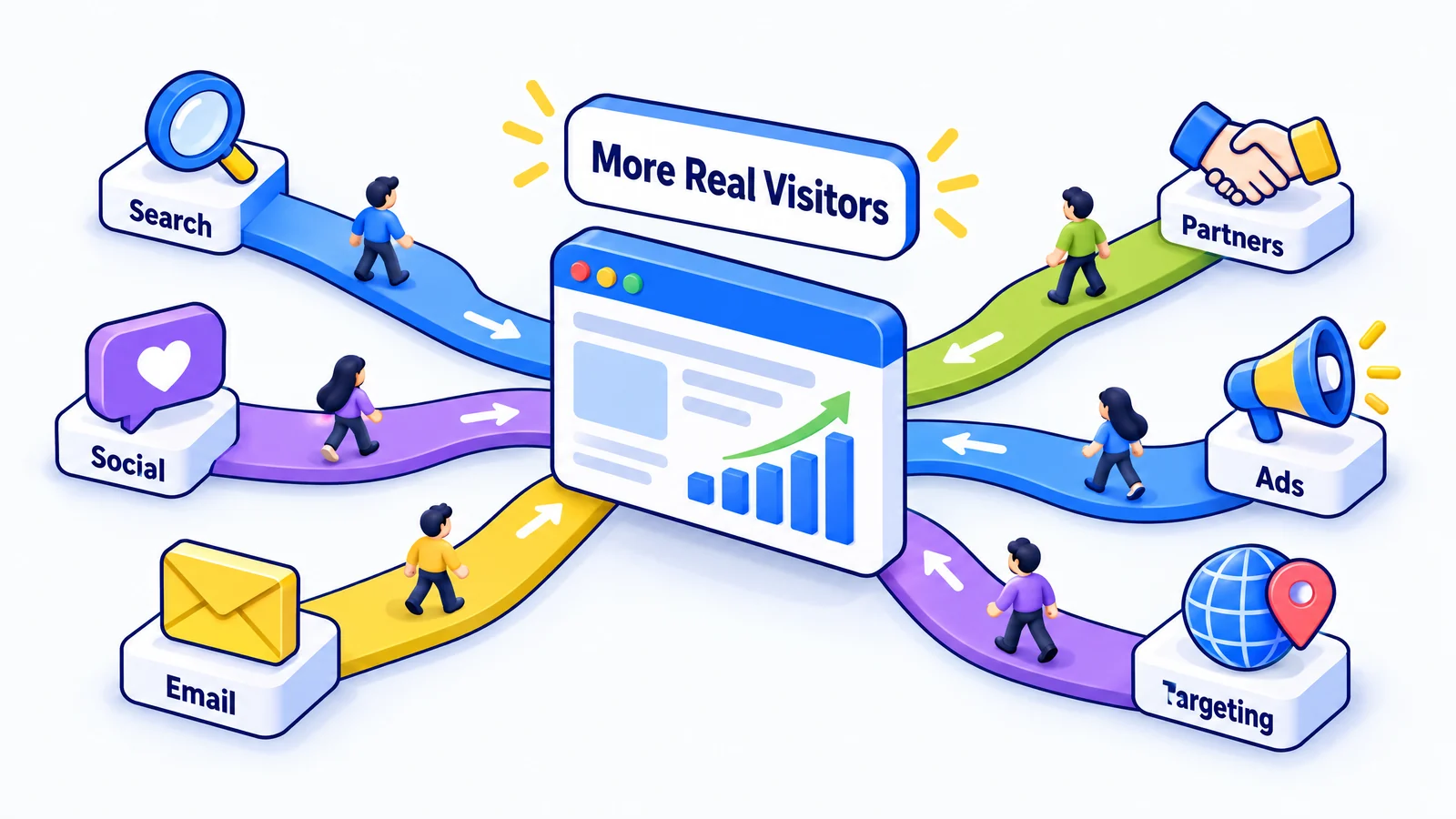
Many site owners ask how to get traffic to your website as if traffic were one thing. Imagine two online shops with 5,000 visits each last month. The first shop got 4,000 of them from one viral social post. The second got 1,800 from search, 1,200 from email, 1,000 from partner sites and the rest from ads and direct visits.
Both reports show the same total, but the risk is very different. The first shop loses most of its audience when the post stops spreading. The second shop has several independent sources, and none of them can take the whole business down. Wikipedia's SEO article makes the same point about search: algorithms change, and there is no guarantee of continued referrals.
A traffic source, or channel, is the route a visitor takes to reach you. Google Analytics 4 (GA4) groups these routes into channels such as Organic Search, Paid Search, Organic Social, Email, Referral and Direct.
Marketers often sort these channels into three types. Earned traffic comes from search results, mentions and shares. Owned traffic comes from your email list and your own audiences, while paid traffic comes from ads and purchased visits.
The practical first step is a simple audit. You can open the Traffic acquisition report in GA4, write down each channel's share of visits and key events, and mark any channel above 50% as a risk. A key event is an action you define as important, such as a sign-up or a purchase. This audit shows which of the 12 ways below fills your biggest gap, so you spend effort where it changes results instead of where it feels familiar.
Buying Website Traffic for Fast Visits
A new site or a new landing page usually starts with almost no visitors. Search rankings can take months, and a fresh email list is small. Meanwhile you need data now: you want to know whether the page loads well on mobile, whether the checkout works and whether the headline makes people scroll. Waiting half a year for that data delays every other decision.
Older shortcuts made this problem worse. Many site owners joined traffic exchanges, where members visit each other's sites to earn credits. Those visitors arrive to collect points, not because they care about your offer, so the numbers grow while the insight stays at zero. Hidden bot traffic sold as "real visitors" creates the same false picture and can mislead your whole analysis.
1. Buying visitors from a transparent provider
Modern traffic services work best when you control the audience and can verify every visit. VisitorBoost, a website traffic generator running since 2005, is one example of this approach. You can buy website visitors by country, niche and device, set the delivery speed and check each visit in Google Analytics. A free trial with 2,000 visits lets you see the traffic on your own site before you pay anything.
This option works because it solves the data problem quickly and on your terms. You choose which page gets visits, from which markets and at what pace, so the test matches the audience you plan to serve. If you want to compare purchased traffic options side by side, our guide to 9 ways to buy website visitors covers organic, social, targeted and bulk visits in one place.
2. Testing small before you scale
A large first order makes a wrong assumption expensive. A smarter path is a small test on one landing page, with one target country and one clear outcome, such as newsletter sign-ups. You then compare the campaign with your normal visitors on the same page and device type.
The test works because it separates delivery from value. Our guide to real vs fake website traffic explains how to check delivery, human origin, intent and business value one level at a time. Automated visits have honest uses too, such as load testing, and our explainer on traffic bots shows where they help and where they hurt. Purchased visits give you speed and data; the channels below give you lasting growth, so the best plans use both.
SEO and Content That Keep Bringing Visitors
Many blogs publish regularly and still get little search traffic. A local bakery might post "Our autumn news" every month, while thousands of people search "how to store sourdough bread". The bakery writes about what it wants to say, and searchers look for answers to their own problems. The two never meet.
Search engine optimization (SEO) is the practice of improving a site's visibility in unpaid, or organic, search results. Old SEO meant repeating a keyword as often as possible. Wikipedia notes that search engines began adjusting their algorithms against such manipulation as early as 1997, and they now use semantic search to understand what a page means. Keyword stuffing today makes a page harder to read and less likely to rank.
3. Targeting the questions your buyers already search
Search queries fall into three broad groups, according to Wikipedia's article on web search queries: informational, navigational and transactional. A person searching "how to fix a dripping tap" wants an answer. A person searching "plumber near me price" wants to hire someone. One page should serve one of these intents well instead of serving all of them badly.
You can build a list of 20 real questions from sales calls, support tickets and the Queries report in Google Search Console. Each question becomes a page or a section that answers it directly in the first paragraph. This works because the demand already exists: you are matching a page to a question people type every day rather than hoping someone finds your news.
4. Refreshing and connecting the pages you already have
Older pages lose traffic slowly. A guide written in 2023 may still rank on page one, but with outdated prices and screenshots its clicks drop month after month. Many site owners keep writing new posts while their best existing pages decay quietly.
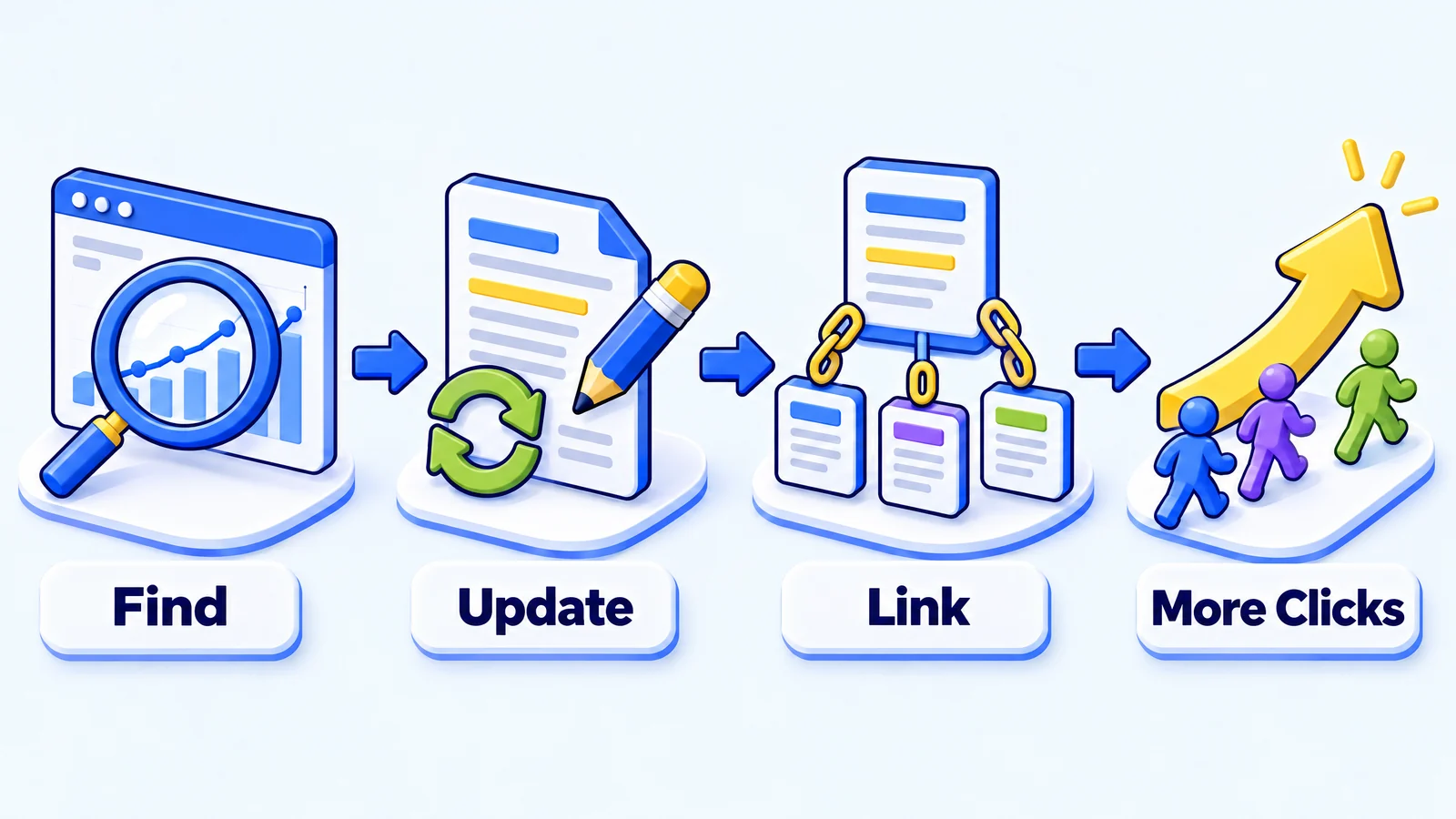
In Search Console, you can sort pages by impressions and look for ones with many impressions but a low click-through rate, the share of searchers who click your result. A clearer title, an updated meta description and fresh facts often lift clicks without any new content. Internal links from related pages then help both people and search engines find the updated page. If your site covers health, finance or legal topics, which Google treats as "Your Money or Your Life" subjects, an expert review of each refresh protects readers and supports trust.
Social Media, Email and Partnerships
A common social media routine looks like this: a company posts "New blog post!" with a link on four platforms and gets a dozen clicks. The post gives people no reason to stop scrolling, and the audience on most of those platforms is not the company's buyers. The effort feels productive, but the traffic report barely moves.
Owned and shared channels need a different mindset from search. Here you reach people who did not ask a question, so the content has to earn attention on its own. The three ways below build audiences that send visitors again and again, which is why they often grow steadier traffic than a single viral moment.
5. Sharing useful content where your audience already spends time
You can choose one or two platforms where your buyers are active, then post the actual insight in the post itself: a short tip, a chart or a before-and-after example. The link to the full guide goes at the end or in a follow-up comment. Many platforms show posts to more people when users engage with them, and a useful post earns that engagement.
This approach works because it respects how people use social media. They scroll for value and entertainment, not for links. When your post already helps them, the click to your site becomes a natural next step instead of an interruption.
6. Building an email list you own
Email is a channel no platform can take away from you. When a social network changes its feed or a search update moves your rankings, your subscribers still receive your messages. A clear sign-up offer, such as a checklist or a short course, gives visitors a reason to join.
Wikipedia's article on email marketing describes the consent and anti-spam laws that apply, such as the CAN-SPAM Act in the United States and the GDPR in the European Union. Buying lists breaks the trust these rules protect and damages your sender reputation. A smaller list of people who asked to hear from you sends more visitors than a large list of strangers who ignore you.
7. Partnering with sites that serve the same people
Another business often already has the audience you want. A web designer and a copywriter serve the same clients, and a running shoe shop and a marathon blog serve the same readers. Guest articles, joint webinars, podcast interviews and newsletter swaps bring referral traffic, which means visits from links on other sites.
Partnerships work because the visitor arrives with a recommendation from someone they already trust. The shortcut to avoid is buying links only to influence rankings. Wikipedia's article on spamdexing describes how such schemes manipulate search indexes, and search engines treat them as spam. A partnership link earns its value from the readers who click it, not from the ranking it might move.
Paid Ads and Targeted Traffic
Paid ads are one of the fastest ways to drive traffic to your website, and also one of the fastest ways to waste a budget. Picture a dental clinic in Berlin bidding on the word "dentist" across all of Germany. The ads get clicks from people in Hamburg and Munich who will never visit the clinic. The traffic report grows, while the appointment book stays empty.
The problem is rarely the channel itself. It is broad targeting combined with a landing page that does not match the ad. The two ways below fix both parts, so every paid visit has a fair chance of turning into a customer.
8. Running paid ads on high-intent searches
Pay-per-click (PPC) advertising, as Wikipedia's PPC article explains, means you pay when someone clicks your ad. You can start with a small daily budget on transactional searches, such as "emergency dentist Berlin", and add negative keywords, which are terms that should never trigger your ad. Each ad should lead to a page that repeats its promise.
This works because you pay only for people who already show buying intent, and you learn within days which messages convert. Ad platforms also face click fraud, where people or programs click ads without real interest. Checking your paid sessions against key events in GA4 helps you spot that waste early.
9. Targeting the right country, device and audience
Untargeted traffic dilutes every metric you track. A shop that ships only to the UK gains nothing from visits in countries it cannot serve, and a mobile-only offer learns little from desktop visitors. Understanding what geo-targeted traffic is, which means visits limited to the countries, regions or cities you choose, helps you set every campaign around the market you can actually serve.
You can apply the same filters to ads, partner campaigns and purchased visits: country, device, language and interest. Our guide to real buyer traffic shows how to match keyword, country and device settings to people who are ready to buy. Fewer, better-matched visits give you clearer data and a higher conversion rate than a large crowd of the wrong people.
How to Increase Traffic to an E-commerce Store
Online stores face a special traffic problem. Many stores copy product descriptions from the manufacturer, so the same text appears on hundreds of sites. Imagine a store with 400 coffee grinders, each with the supplier's description. Search engines have little reason to rank that store above the other shops using identical words.
Category pages suffer too. They often show a grid of products with no text at all, even though people search for category terms such as "manual coffee grinder" far more than for individual model numbers. The store has thousands of pages, but very few of them answer a real question.
10. Optimizing product pages, category pages and shopping feeds
You can start with your 20 best-selling products and write unique descriptions that answer buyer questions: size, use, care and who the product suits. Each main category page can get a short guide at the top and an FAQ at the bottom. Product structured data, a standard code format that describes price and availability, helps search engines display your products in richer results.
The same steps apply when you drive traffic to a Shopify store or any other hosted shop: the platform gives you the pages, but unique content, a clean product feed for shopping listings and honest reviews make them findable. Clear shipping and return information matters too, because shoppers who trust the store click through and come back. This works because you turn product pages into answers, which serves search engines and shoppers with the same improvement.
Comparing Your Traffic Sources With Competitors and Measuring Results
Without a benchmark, a traffic number means little. Is 3,000 visits a month good for your niche? You cannot tell until you see what similar sites achieve and where their visitors come from. A competitor might get half its traffic from YouTube or a newsletter you never thought about.
Measurement has the same blind spot inside your own site. Many owners celebrate a traffic spike without checking whether it produced a single sale. Visits are an input. Leads, orders and returning customers are the results that pay for your marketing.
11. Comparing your channel mix with competitors
Traffic estimation tools show approximate visits, top pages and main channels for other sites. The numbers are estimates, so they work best for comparing patterns rather than exact totals. You can pick three direct competitors and note their strongest channel, their top five pages and the sites that link to them.
This comparison works because it turns guessing into a gap list. If every competitor earns strong referral traffic from industry directories and you have none, that gap is your next project. If a competitor's top page answers a question your site ignores, you have found a topic with proven demand.
12. Tagging campaigns and measuring outcomes, not just visits
UTM parameters are short tags added to a link, such as utm_source=newsletter, that tell your analytics where a visit came from. Wikipedia's article on UTM parameters describes the five standard tags. You can add them to every link you control, from emails to partner posts and purchased campaigns, so no visit lands in the wrong channel.
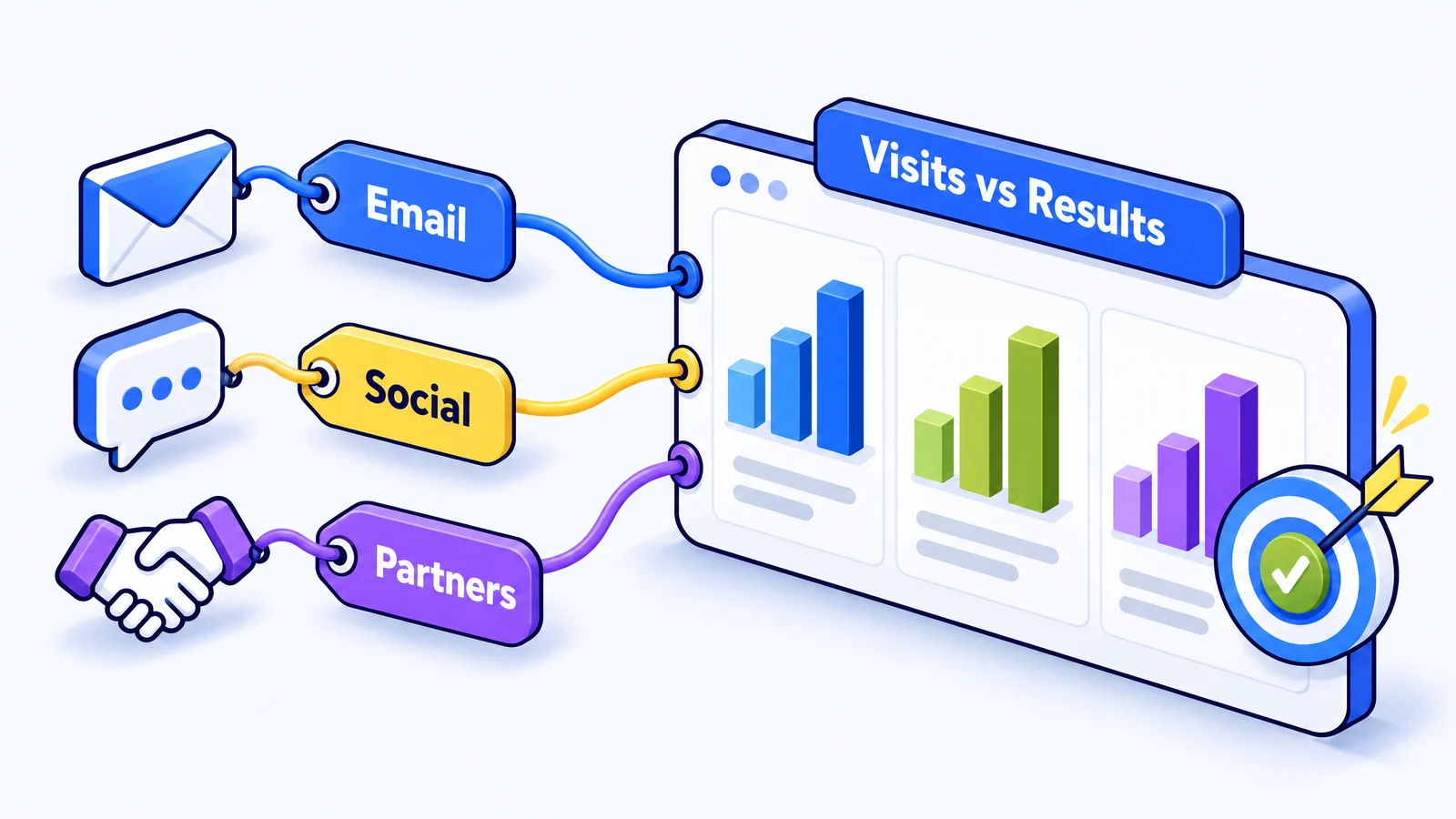
Your monthly report should group website traffic sources by channel and compare visits, key events and revenue for each one. This is how you know how to increase traffic to your website in the way that matters: you put more effort into the channels that bring customers and reduce the ones that only add numbers. A consistent naming rule for UTM values keeps the report clean, because "Email", "email" and "newsletter" otherwise appear as three separate sources.
Conclusion
Learning how to increase website traffic is less about one clever trick and more about a balanced system. Fast options such as targeted purchased visits and paid ads give you data and momentum. Search, content, email and partnerships build traffic that keeps arriving. Measurement tells you which mix works for your business.
You can begin with the channel audit from the first section, pick the two ways that fill your biggest gaps and test them for one month. The shortcuts that inflate numbers always cost more than they save. The goal is not a larger figure in a dashboard, but more of the right people finding a site that helps them.